

Lead

Lead is frequently featured in the news, both nationally and in New Jersey. It’s a toxic substance that causes neurological damage, especially to young children. Lead in drinking water is one source of exposure.
As indicated by recent drinking water test results from schools and homes in New Jersey and across the country (i.e., the widely publicized crisis in Flint, Michigan), lead in drinking water is not uncommon, especially in older buildings.
To explain why this is happening—and to position this crisis within a broader context that considers other water infrastructure needs—the Jersey Water Works Steering Committee issued a statement in 2019. In 2018, it convened the JWW Lead in Drinking Water Task Force, which issued a practical, broadly supported action agenda to eliminate the risk of lead in drinking water throughout New Jersey.
-
02/17/22
Other New Jersey Towns Can Learn From Newark’s Lead Pipe Project
Incoming Jersey Water Works co-chairs Andy Kricun, from Moonshot Missions & US Water Alliance, and Nicole Miller, from Newark DIG share their thoughts on this ‘once-in-a-generation’ opportunity to fix leaking pipes and drains.READ ARTICLE#LeadOpen Patch in a new tabSOURCE
Patch
-
 02/11/22
Completed Newark Lead Service Line Replacement Program Is A Model for Statewide Action
The City of Newark has completed its innovative lead service line replacement program, replacing more than 23,000 lead lines. The program, as revised in 2019, serves as a model for lead service line replacement programs in communities across the state. Jersey Water Works (JWW) congratulates the City of Newark on this historic success. Starting in 2019, JWW brought many partners together to come up with effective solutions to lead in ...READ ARTICLE#LeadSOURCE
Andy Kricun and Nicole Miller, Jersey Water Works co-chairs -
 02/10/22
Lead Service Line Replacement at a Blistering Pace Newark, New Jersey
In most cities, the task of replacing lead service lines (LSLs) has stretched over 20 to 25 years. The City of Newark, New Jersey, however, set an unprecedented pace, removing all of its LSLs in just over two years. This accomplishment, which transformed a crisis into a positive story, reflects recommendations made by a Lead in Drinking Water Task Force organized by Jersey Water Works, a nonprofit collaborative that produced the nation’s first ...READ ARTICLE#LeadSOURCE
Gary Brune, Jersey Water Works Lead in Drinking Water Task Force backbone staff -
 01/12/22
Lead Service Line Replacement… And Now For the Hard Part
In July, 2021, Governor Murphy signed a new law (P.L.2021, c.183; https://www.njleg.state.nj.us/2020/Bills/AL21/183_.HTM) requiring the state’s water utilities to replace lead service lines (LSLs) within ten years. Implementation will be challenging. The few cities in other states that have successfully tackled this problem typically required 20 to 25 years to complete the job. To accelerate the effort, Jersey Water Works’ Lead in Drinking Water ...READ ARTICLE#Drinking Water, #LeadSOURCE
Gary Brune, JWW Lead in Drinking Water Task Force backbone staff -
 12/17/21
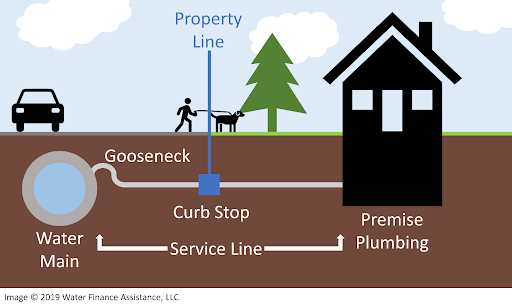
Jersey WaterCheck Data Show New Jersey Water Systems Actively Identifying and Eliminating Lead Service Lines
Identifying and removing lead service lines from our water systems is one of the most urgent issues in drinking water today—in New Jersey and around the country. President Biden has repeatedly stated his goal of removing all lead service lines from water systems across the country, which will likely feature as a requirement when the EPA issues its revised Lead and Copper Rule. The recently passed Infrastructure Investment and Jobs Act includes ...READ ARTICLE#Data, #LeadSOURCE
Glenn Barnes, Director, Water Finance Assistance
-
 04/15/19
Rates could fund lead pipe replacement in critical states: Laws in states with the most lead service lines support the practice
In Rates could fund lead pipe replacement in critical states, Emmett Environmental Law & Policy Clinic at Harvard Law School and Environmental Defense Fund reviewed state laws and policies in 13 states with the most lead service lines (LSLs), and found no explicit barriers to using rate funds to replace the lines on private property. These states have an estimated 4.2 million LSLs, more than two-thirds of the nation’s total. In these states, ...LEARN MORE#Drinking Water,#Lead -
 03/26/19
Get the Lead Out: Ensuring Safe Drinking Water for Our Children at School
The report "Get the Lead Out: Ensuring Safe Drinking Water for Our Children at School" by Environment America and the U.S. PIRG Education Fund provides recommendations for states and communities to address the problem of lead in drinking water in schools across the nation.LEARN MORE#Community Engagement and Partnerships,#Lead -
 03/20/19
Research to Move Toward Evidence-Based Recommendations for Lead Service Line Disclosure Policies in Home Buying and Home Renting Scenarios
Homebuyers and renters take action when told they may have a lead service line. EDF and collaborators at Cornell published a new study that provides insight into how disclosure policies can impact potential home-buyer and renter behavior. This effort builds on a report EDF published in 2017 according to their ability to help homebuyers make informed decisions about lead service lines (LSLs) before they sign a sales contract. LSLs are pipes that ...LEARN MORE#Community Engagement and Partnerships,#Lead -
 01/10/19
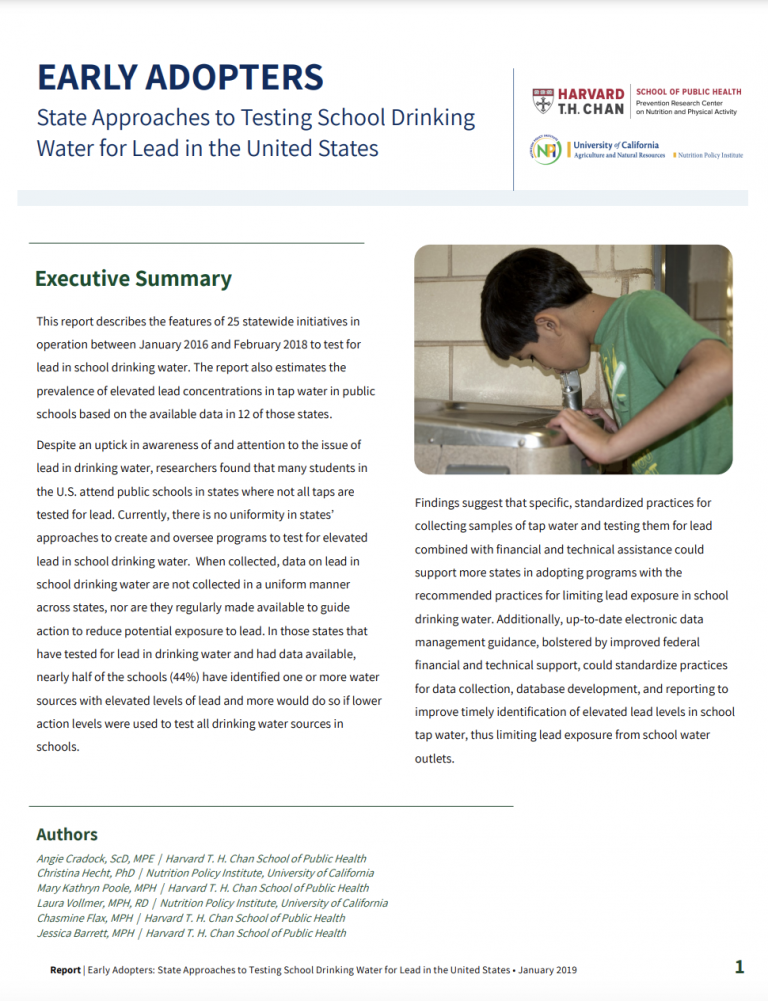
State Approaches to Testing School Drinking Water for Lead in the United States
This report by and University of California Nutrition Policy Institute, State Approaches to Testing School Drinking Water for Lead in the United States, describes the features of statewide initiatives in operation between January 1, 2016 and February 28, 2018 in 24 states and the District of Columbia to conduct testing for lead in school drinking water, and the prevalence of elevated lead concentrations in tap water in public schools based on ...LEARN MORE#Drinking Water,#Lead -
 11/19/18
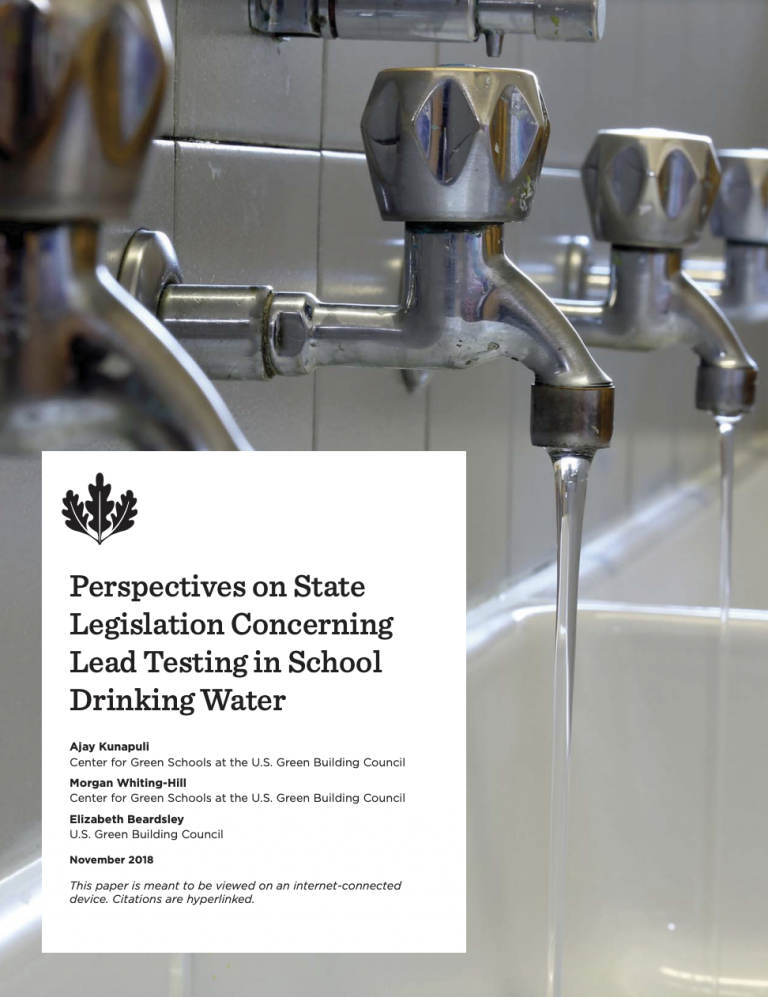
Perspectives on State Legislation Concerning Lead Testing in School Drinking Water
The Center for Green Schools at the U.S. Green Building Council undertook this study, Perspectives on State Legislation Concerning Lead Testing in School Drinking Water, to inform state legislators and advocates as they consider new state laws to address lead contamination in school drinking water. They reviewed the growing body of state laws concerning testing of lead in school water, and they identified relevant reports that could help ...LEARN MORE#Drinking Water,#Lead