


Wastewater

“Wastewater” refers to contaminated water that cannot be consumed. “Wastewater” is used water from any combination of domestic, industrial, commercial, or agricultural activities, surface runoff or stormwater, and any sewer inflow or sewer infiltration. As a term, “wastewater” includes both industrial and sanitary (i.e., municipal) categories. Thus, there are industrial wastewater treatment systems and sanitary/municipal wastewater collection and treatment systems. “Sewage” is wastewater that is produced by a community of people (i.e., domestic/municipal wastewater), which mostly consists of greywater (from sinks, bathtubs, showers, dishwashers, and clothes washers), blackwater (the water used to flush toilets, combined with the human waste and toilet paper that it flushes away), and soaps/detergents. Thus, this term is associated with municipal wastewater systems.
The Environmental Protection Agency (EPA) explains that “the collection and treatment of domestic sewage and wastewater is vital to public health and clean water. It is among the most important factors responsible for the general level of good health enjoyed in the United States. Sewers collect sewage and wastewater from homes, businesses, and industries and deliver it to wastewater treatment facilities before it is discharged to water bodies or land, or reused.”
-
 07/24/20
Bacteria Are Fouling the Water off NJ’s Beaches, Advocates Warn. It’s from Leaking Septic Systems, Farms and More
“Report says a third of beaches exceeded federal limits at least once last year, putting swimmers’ health at risk.”READ ARTICLE#Community Engagement and Partnerships, #Data, #Drinking Water, #Green Infrastructure/Stormwater Management, #Paying for Water Infrastructure, #Smart CSO Control Plans, #WastewaterOpen NJ Spotlight News in a new tabSOURCE
NJ Spotlight News
-
 07/20/17
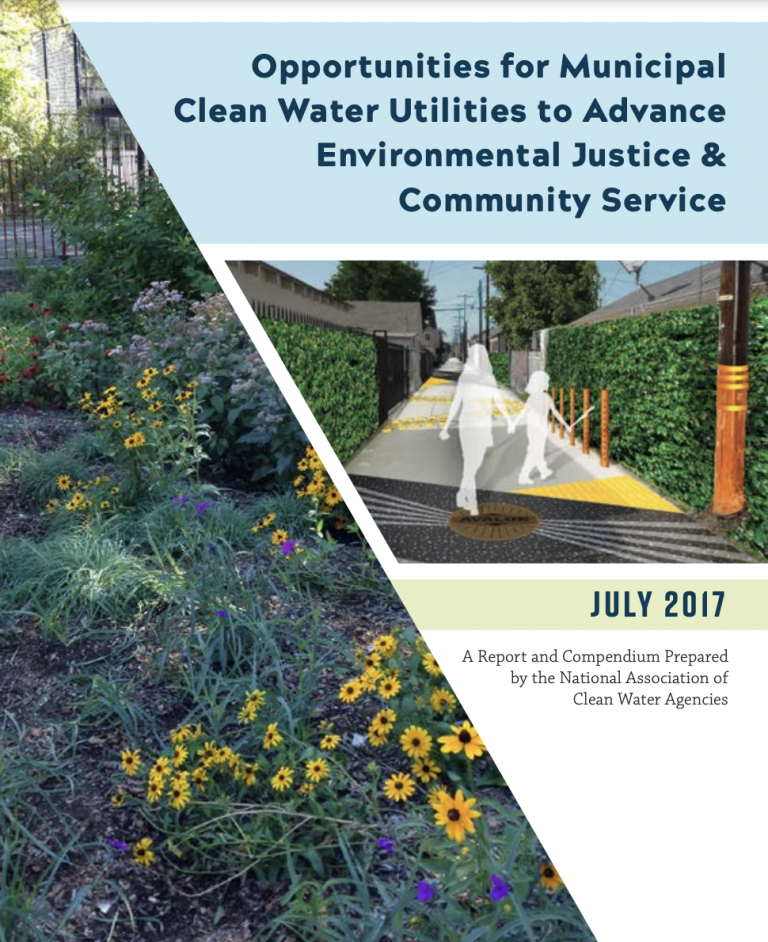
Opportunities for Municipal Clean Water Utilities to Advance Environmental Justice & Community Service
The National Association of Clean Water Agencies prepared this report to increase awareness of the many benefits America's clean water utilities provide to their communities. The projects in this compendium represent efforts by NACWA members to reach beyond the traditional model of simply conveying and treating wastewater and stormwater, to become assets and partners in their communities. Some of the projects included in this compendium ...LEARN MORE#Community Engagement and Partnerships,#Drinking Water,#Green Infrastructure/Stormwater Management,#Wastewater -
 04/26/17
Transforming the East Orange Water Commission
Mayor Lester Taylor of East Orange delivered this presentation at the 2017 WaterNow Alliance Summit to stress the importance of understanding the current water reality in one of New Jersey's oldest cities. This presentation outlines the challenges faced in water system management, the increasing demands on water sources, the degraded state of water infrastructure, and the strategies that have been implemented to safeguard drinking water quality ...LEARN MORE#Drinking Water,#Paying for Water Infrastructure,#Wastewater -
 04/06/17
The Economic Benefits of Investing in Water Infrastructure
This economic impact analysis from the The Value of Water Campaign quantifies the the need to increase investments in the nation's water infrastructure and the impacts on economic growth and employment. Based on a 2016 assessment by the American Society of Civil Engineers (ASCE), this study estimates that the US needs to invest an additional $82 billion per year in water infrastructure at all levels of government over the next 10 years to meet ...LEARN MORE#Community Engagement and Partnerships,#Drinking Water,#Lead,#Paying for Water Infrastructure,#Wastewater,#Workforce -
 02/09/17
Presentations from Workshop: “Fostering Municipal and Utility Partnerships for Water Quality Management”
At the "Fostering Municipal and Utility Partnerships for Water Quality Management" Workshop on Feb. 7, 2017, audience members learned about new best practices that will help municipal governments, working in partnership with their utilities, conduct/implement water loss audits, utility asset management and green infrastructure planning and implementation. The workshop was presented in partnership with the Association of Environmental ...LEARN MORE#Affordability,#Community Engagement and Partnerships,#Data,#Drinking Water,#Green Infrastructure/Stormwater Management,#Lead,#Paying for Water Infrastructure,#Smart CSO Control Plans,#Wastewater,#Workforce -
 12/20/16
One Water Roadmap: The Sustainable Management of Life’s Most Essential Resource
This report from the U.S. Water Alliance makes a case for the One Water approach and highlights successful strategies and real-world examples in practice.LEARN MORE#Affordability,#Community Engagement and Partnerships,#Data,#Drinking Water,#Green Infrastructure/Stormwater Management,#Lead,#Paying for Water Infrastructure,#Smart CSO Control Plans,#Wastewater,#Workforce