
Lead

Lead is frequently featured in the news, both nationally and in New Jersey. It’s a toxic substance that causes neurological damage, especially to young children. Lead in drinking water is one source of exposure.
As indicated by recent drinking water test results from schools and homes in New Jersey and across the country (i.e., the widely publicized crisis in Flint, Michigan), lead in drinking water is not uncommon, especially in older buildings.
To explain why this is happening—and to position this crisis within a broader context that considers other water infrastructure needs—the Jersey Water Works Steering Committee issued a statement in 2019. In 2018, it convened the JWW Lead in Drinking Water Task Force, which issued a practical, broadly supported action agenda to eliminate the risk of lead in drinking water throughout New Jersey.
-
08/17/22
On water, NJ faces a confluence of challenges
Jersey Water Works co-chair Andy Kricun, from Moonshot Missions & US Water Alliance, shares his thoughts on the recent challenges to New Jersey's water supply.READ ARTICLE#Climate Resilience, #Drinking Water, #Lead, #WastewaterOpen NJ Spotlight News in a new tabSOURCE
NJ Spotlight News
-
 06/13/22
EDA Pilot Program Could Address Lead Exposure in NJ Child Care Facilities
Drawing on an appropriation of $54.5 million from the federal American Rescue Plan authorized in July, 2021 (P.L. 2021, c.144) and a related state appropriation of $4.5 million, phase one of NJEDA’s Child Care Facilities Improvement Pilot Program will provide at least $15 million in “full cost” grants (i.e., no match required) ranging from $50,000 to $200,000 for physical improvements to upgrade licensed child care centers and family child care homes.READ ARTICLE#LeadSOURCE
Gary Brune, Senior Policy Analyst, New Jersey Future for Jersey Water Works Lead in Drinking Water Task Force -
 06/09/22
Registration Opens: Topics in Lead Service Line Replacement Implementation Workshop
Jersey Water Works Lead Service Line (LSL) Implementation Workgroup and New Jersey Water Association invite you to join us on Wednesday, June 22, 2022, 11:00 a.m. – 1:15 p.m. for a workshop designed to help water utilities navigate the LSL replacement looming compliance deadline.READ ARTICLE#Lead -
 02/17/22
Utilities Set to Engage in Local Outreach, Spread Awareness Regarding Lead Service Lines
In accordance with groundbreaking state legislation designed to reduce lead in drinking water and improve public health, public community water utilities in New Jersey have taken the first steps to identify and replace the state’s lead-containing service lines, which deliver water to individual dwellings. Within the next few weeks, they will send certified letters to all customers who have a known lead-containing service line informing them of ...READ ARTICLE#LeadSOURCE
Gary Brune, Jersey Water Works Lead in Drinking Water Task Force backbone staff -
 02/17/22
Putting Lead Service Lines in New Jersey’s Rearview Mirror
A new state law enacted in July 2021 requires New Jersey water systems to replace lead service lines (LSLs) within 10 to 15 years. Due to the age of its housing stock, New Jersey is estimated to have 350,000 LSLs, the fifth highest of all states, and at an average cost of $6,700, the total price tag is projected to be approximately $2.3 billion. To discuss this challenge, as well as best practices that could ensure a timely, cost-efficient ...READ ARTICLE#LeadSOURCE
Gary Brune, Jersey Water Works Lead in Drinking Water Task Force backbone staff
-
 03/01/21
Understanding Jersey WaterCheck Data – Terms and Systems
This document explains the following related to Jersey WaterCheck: Terms used, their definitions, and clarification if they differ from typical industry usage Which “systems” were included/excluded and the basic information provided for each The breakdown of systems based on population servedLEARN MORE#Data,#Drinking Water,#Lead,#WastewaterPRODUCT OF
-
 03/01/21
Jersey WaterCheck Frequently Asked Questions
Jersey WaterCheck was created by Jersey Water Works, a collaborative working to improve water infrastructure in New Jersey. Jersey WaterCheck was designed to help people understand and connect to their water and wastewater systems and to measure key parts of our state’s water infrastructure. By putting all this information in one place, Jersey WaterCheck can help New Jersey residents, decision makers, and water system managers understand the ...LEARN MORE#Data,#Drinking Water,#Lead,#WastewaterPRODUCT OF
-
 10/15/19
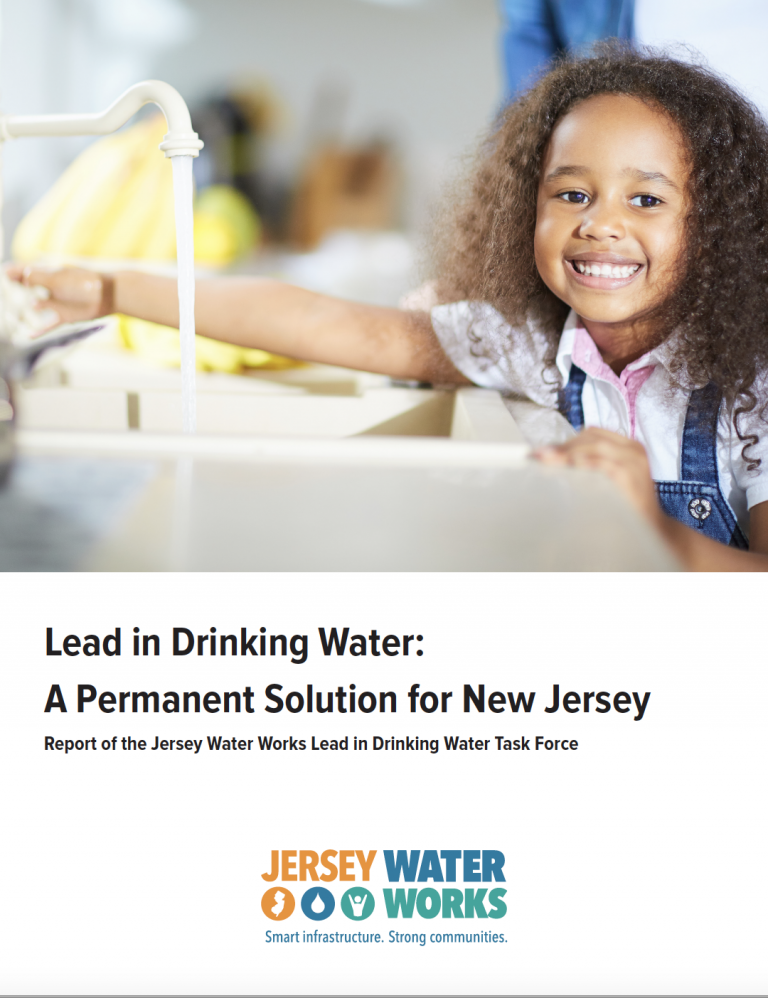
Lead in Drinking Water: A Permanent Solution for New Jersey
The task force’s work has culminated in the release of Lead in Drinking Water: A Permanent Solution for New Jersey. This report outlines actions New Jersey can take to virtually eliminate lead in drinking water in 10 years.LEARN MORE#Drinking Water,#LeadPRODUCT OF
-
 08/08/19
Developing Lead Service Line Inventories Presented by the Association of State Drinking Water Administrators
Many state drinking water administrators are considering developing inventories of the materials used in service lines that are part of the distribution systems of community water systems (CWSs) they regulate. Some states have already conducted voluntary or mandatory surveys of CWSs whether on their own or in response to state legislation. Others are preparing to use the information in the next round of Drinking Water Infrastructure Needs Survey ...LEARN MORE#Drinking Water,#Lead -
 05/13/19
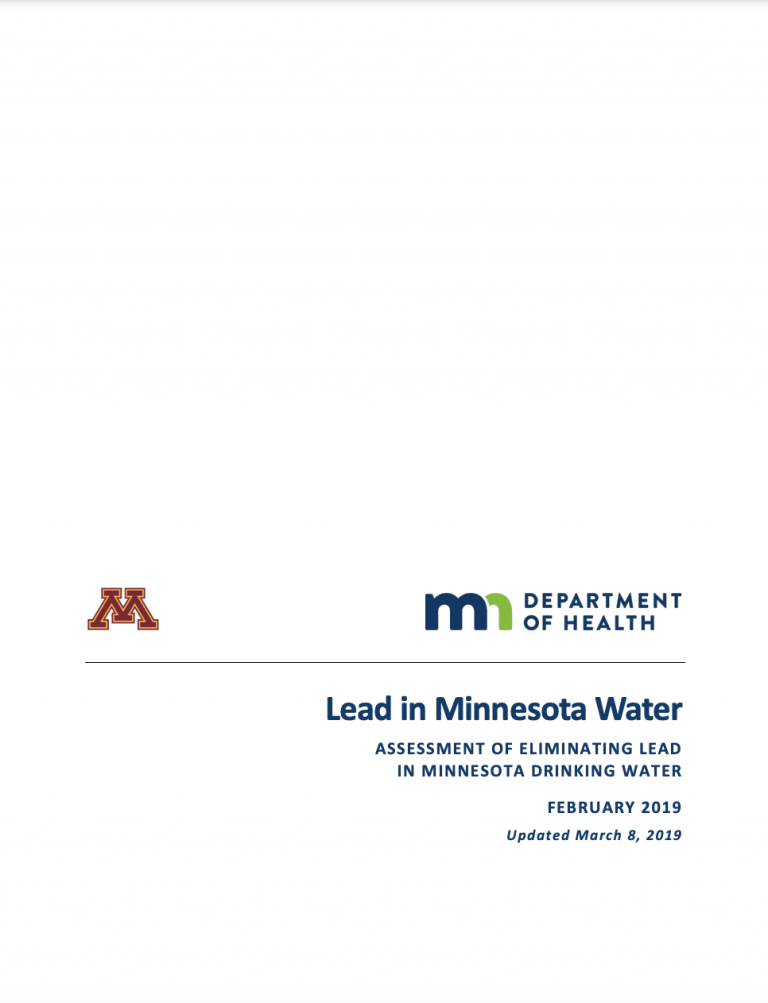
Assessment of Eliminating Lead in Minnesota Drinking Water
The 2017 Minnesota Legislature directed the Minnesota Department of Health (MDH) to “conduct an analysis to determine the scope of the lead problem in Minnesota's water and the cost to eliminate lead exposure in drinking water.” In this report, Assessment of Eliminating Lead in Minnesota Drinking Water, MDH assesses the scope of the lead problem by examining the extent of lead already in water systems as well as factors that allow lead to get in ...LEARN MORE#Drinking Water,#Lead