
Lead in Drinking Water Advisory Council (formerly Task Force)

Every person in New Jersey deserves a safe, healthy environment that nurtures their full potential. Lead exposure thwarts this basic goal. Across New Jersey, lead in drinking water threatens human health, especially among children.
To address the risks from lead in water, Jersey Water Works, with support from The Fund for New Jersey, convened a 30-member task force of representatives from local, state, and federal governments, water utilities, academia, environmental and public health organizations, and smart growth and community advocacy groups.
TASK FORCE:
Beginning in December 2018, the task force worked to determine practical, cost-effective, equitable, and permanent solutions that will ensure people across the state can access drinking water free from the risks of lead.
TWO REPORTS:
- Lead in Drinking Water: A Permanent Solution for New Jersey
- Lead in Drinking Water in Child Care Facilities: Ensuring the Future for New Jersey’s Children
WORK GROUP:
In 2021, a new Lead Service Line Implementation Workgroup was created to identify best practices to help water utilities comply with the statutory goal of replacing lead service lines in ten years. To learn more, check out the resource page.
ADVISORY COMMITTEE:
In 2024, the Task Force transitioned to an Advisory Committee focusing on specific projects and providing expertise as needed.
With a grant from The Fund for New Jersey, staff support for the Lead in Drinking Water Task Force is provided by New Jersey Future, a nonprofit, nonpartisan organization that promotes sensible growth, redevelopment and infrastructure investments in the state and facilitates the Jersey Water Works collaborative.
See Jersey Water Works latest news on lead in drinking water.
Questions about the JWW Lead in Drinking Water Task Force?
Please contact Jersey Water Works’ Backbone staff Deandrah Cameron at dcameron@njfuture.org or 609-262-3545 x1022.
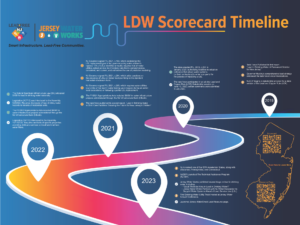
The Lead In Drinking Water Task Force recently did a 5-year review and evaluation (2019-2023). The scorecard timeline highlights the major milestones of the committee’s work.
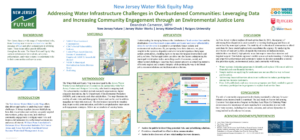 The poster above highlights the New Jersey Water Risk Equity Map as a tool to tackle water infrastructure challenges in overburdened communities. It showcases collaborative efforts between Rutgers University, Jersey Water Works, and Jersey WaterCheck and underscores each organization’s commitment to advancing equity. View the full poster here.
Deandrah Cameron, Policy Manager at New Jersey Future and JWW backbone staff, secured third place in the American Water Works Association (AWWA) Annual Conference and Exposition ACE2024 Fresh Ideas Poster Competition held in Anaheim, California! The competition featured students and young professionals, who won their individual AWWA Section competitions.
Committee initiatives and work include:




The Task Force’s recommendations include:
- A coordinated state effort to comprehensively address lead in drinking water.
- A package of legislation that would simultaneously require and empower water utilities to replace dangerous lead service lines regardless of ownership.
- Establishment of state agency regulations, outreach programs, transparency measures, including disclosure of the presence of lead by property owners during the process of selling or renting property to ensure safe drinking water in homes.
- Special actions to address lead in water in schools and childcare facilities.
These actions should be complemented by other efforts to address lead exposure and improve water infrastructure systems.
See the 2022-2023 scorecard measuring New Jersey’s progress on these recommendations.
The public commitments listed below are from the members of the Jersey Water Works Lead in Drinking Water Task Force affirmed in 2019. They are either new projects, programs, or resources that help advance the goal of drastically reducing lead in drinking water in New Jersey and build momentum for future implementation of the report’s recommendations.
-
 04/20/23
Jersey Water Works Response to N.J.A.C. 5:30 Proposed Chapter Readoption
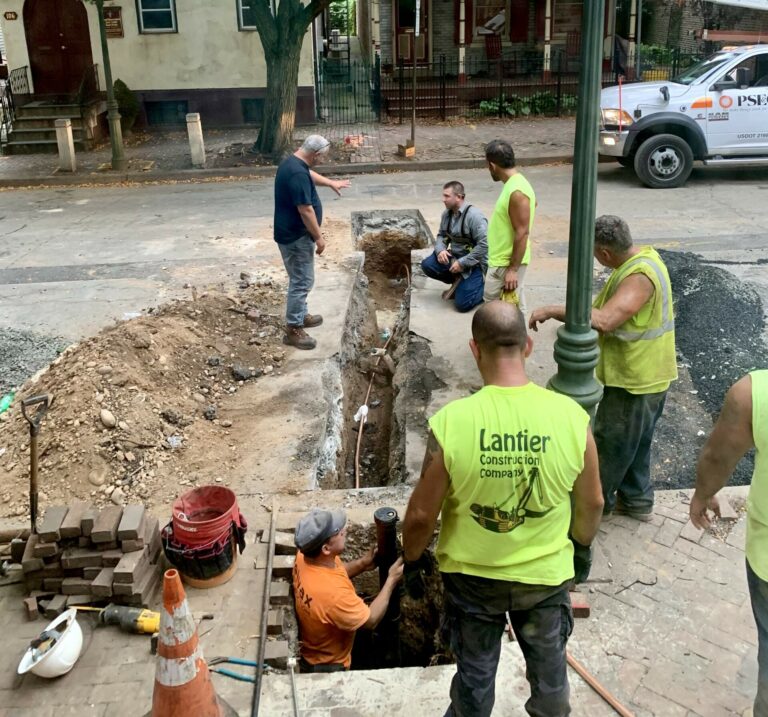
Photo description: Lead service line replacement in Trenton, NJ. Photo credit: Peter Kasabach. On April 19, 2023, the JWW Lead Service Line (LSL) Implementation Workgroup Co-Chairs, Mike Furrey and Richard Calbi, submitted comments to DCA on policies affecting administrative fees for road work projects like LSL replacement.LEARN MORE#LeadPRODUCT OF
-
 08/24/22
Let’s Get the Lead Out of Our Drinking Water: Key Information that NJ Local Officials Need and Want to Know
Access to clean and safe drinking water is important for the health and safety of all individuals in New Jersey, and has been a national priority since Congress passed the Safe Drinking Water Act of 1974. As there is no safe level for lead exposure, water systems in New Jersey are working to meet the new statutory requirement to replace all lead service lines (LSL) by 2031. This monumental effort requires collaboration and coordination; mayors, ...LEARN MORE#LeadPRODUCT OF
-
 06/30/22
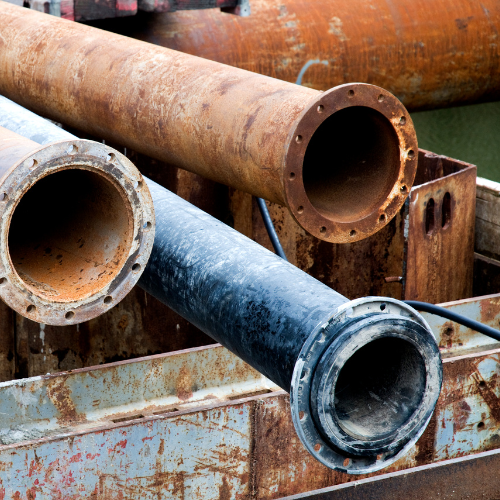
Lead Service Line Replacement Implementation Workshop Recap and Resources
The Lead Service Line Replacement (LSLR) Implementation Workgroup of Jersey Water Works’ Lead in Drinking Water Task Force partnered with the New Jersey Water Association on Tuesday, June 22, 2022, to offer guidance to NJ Water Systems Operators on the implementation the New Jersey statute (P.L. 2021, c.183) enacted on July 22, 2022. Over 160 participants joined the workshop on June 22, which also offered Training Contact Hours (TCH) Credits. ...LEARN MORE#LeadPRODUCT OF
-
 05/27/22
Procurement Toolkit Draft for Request for Qualifications (RFQ)
This document provides a draft scope for an RFQ that would identify consultants who have the requisite expertise to administer either individual aspects or the entirety of the federal and state Lead and Copper Rule Revisions (LCRR), including a lead service line (LSL) replacement program, on behalf of participating water utilities in New Jersey.LEARN MORE#LeadPRODUCT OF
-
 05/27/22
Alternative Procurement Options for Lead Service Line Replacement
State legislation enacted in July 2021 requires water utilities in New Jersey to replace lead service lines (LSLs) within 10 years (i.e., by 2031). Under the best of circumstances, state and federal aid will likely fall far short of the estimated statewide cost of $2.3 billion and, as water utilities seek to perform the work within the deadline, supply and demand for contractor services could increase prices. This paper addresses the question: ...LEARN MORE#LeadPRODUCT OF