


Green Infrastructure/Stormwater Management

Most people are familiar with “gray” water infrastructure, which includes hard concrete and metal pipes, holding tanks, pumps, water tunnels, and treatment plants. These systems play a key role in managing drinking water, wastewater, and combined sewer systems.
“Green” infrastructure is a newer approach to stormwater management that mimics nature by capturing stormwater so it can either be reused or seep into the ground where it falls, rather than flowing into underground sewer and storm pipes. Methods for stormwater capture include rain gardens, pervious pavement, planted swales, and storage containers, such as cisterns and rain barrels. Green infrastructure features can help reduce stress on water systems and provide good local jobs, while making the communities where they’re installed healthier and more vibrant.
Both gray and green infrastructure are important components of water infrastructure systems across the state. Communities with combined sewer systems, in particular, will be evaluating gray and green infrastructure approaches to identify the best combination that meets regulatory requirements cost-effectively and in a manner that provides tangible community benefits.
-
 11/20/19
Restoring wetlands to improve water quality
Amy S. Greene Environmental Consultants was honored with a 2019 One Water Award for successfully restoring water quality to more than 90 acres of critical wetland along the Pequest River, which will be managed as part of the Kittatinny Valley State Park.READ ARTICLE
#Green Infrastructure/Stormwater ManagementSOURCE
Lauren Belsky, Program Coordinator, Jersey Water Works -
 09/10/19
Build streets for everyone with this new model policy
NJDOT’s new model complete and green streets policy and guide provides practical guidance for municipalities, counties, and agencies to improve roads and the overall landscape.READ ARTICLE#Green Infrastructure/Stormwater ManagementSOURCE
Emily Eckart, Manager of Communications and Development -
 09/09/19
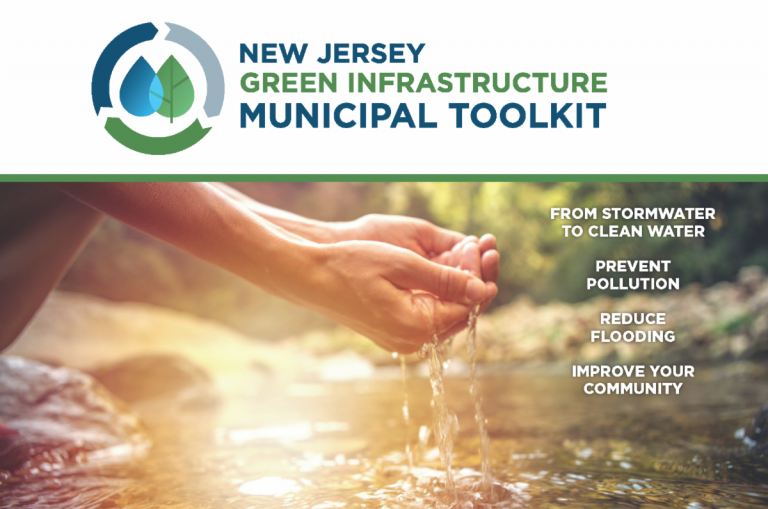
Fight flooding and pollution with the updated Green Infrastructure Municipal Toolkit
The award-winning Green Infrastructure Municipal Toolkit is perfect for community leaders who want to manage stormwater sustainably, reduce localized flooding, and improve water quality.READ ARTICLE#Drinking Water, #Green Infrastructure/Stormwater ManagementOpen Kandyce Perry, New Jersey Future in a new tabSOURCE
Kandyce Perry, New Jersey Future
-
 08/05/19
Reports on Potential Solutions from CSO Permit Holders Require Local Input
This content originally appeared as a blog post from Sewage-Free Streets and Rivers. The statewide coalition comprises a number of JWW member organizations and it helps to advance the collaborative’s shared goals.READ ARTICLE#Green Infrastructure/Stormwater ManagementOpen Sewage-Free Streets and Rivers in a new tabSOURCE
Sewage-Free Streets and Rivers
-
 04/19/19
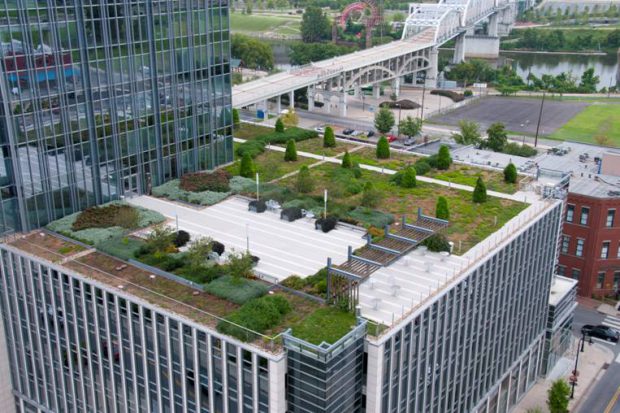
At Convention, Builders Take Interest in Green Infrastructure
Why is green infrastructure right for your project? Changing rules will make it a central element of stormwater management.READ ARTICLE#Green Infrastructure/Stormwater ManagementOpen Kandyce Perry, New Jersey Future in a new tabSOURCE
Kandyce Perry, New Jersey Future
-
 07/17/18
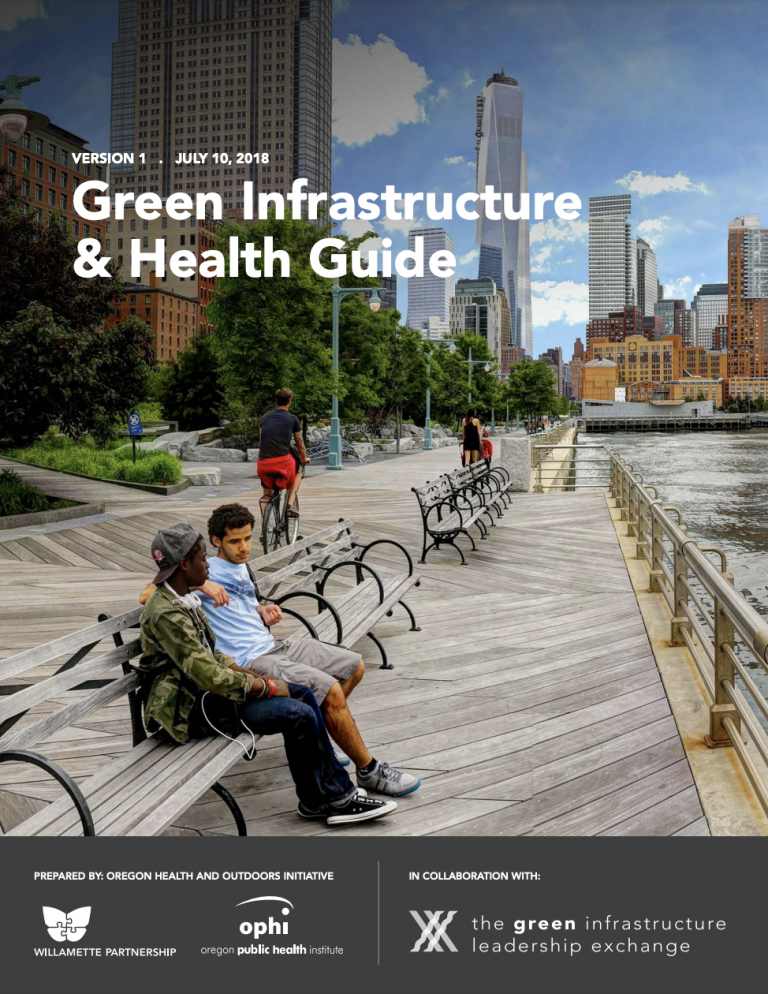
Green Infrastructure & Health Guide
The Green Infrastructure & Health Guide provides some general principles, best practices, and experiences about how best to use green infrastructure to promote better health equity. It is designed for use by managers, engineers, community organizations, planners, and others who are siting, designing, building, and stewarding green infrastructure in urban areas and rural towns across Canada and the United States. The guide is a product of ...LEARN MORE#Green Infrastructure/Stormwater Management -
 06/07/18
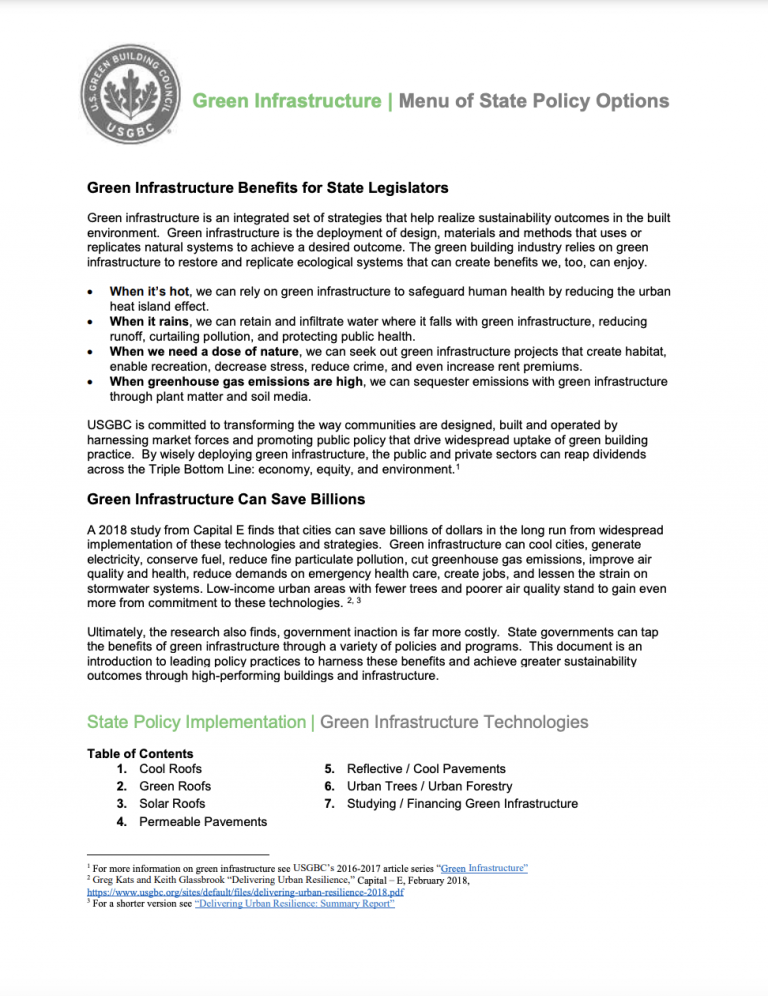
Menu of State Policy Options for Green Infrastructure
This document produced by the U.S. Green Building Council, Menu of State Policy Options for Green Infrastructure, is an introduction to leading policy practices to harness the benefits of green infrastructure and achieve greater sustainability outcomes through high-performing buildings and infrastructure. The resource can help state legislatures take decisive action to expand green infrastructure practices.LEARN MORE#Green Infrastructure/Stormwater Management -
 04/25/18
Working with the Market: Economic Instruments to Support Investment in Green Stormwater Infrastructure
This report, Working with the Market: Economic Instruments to Support Investment in Green Stormwater Infrastructure, will help stormwater program managers leverage market forces to drive implementation and investment in green infrastructure that meets their needs. Over the next 20 years, communities across the U.S. are likely to invest upwards of $150 billion to manage stormwater infrastructure and the associated impacts on water quality, ...LEARN MORE#Green Infrastructure/Stormwater Management,#Paying for Water Infrastructure -
 04/16/18
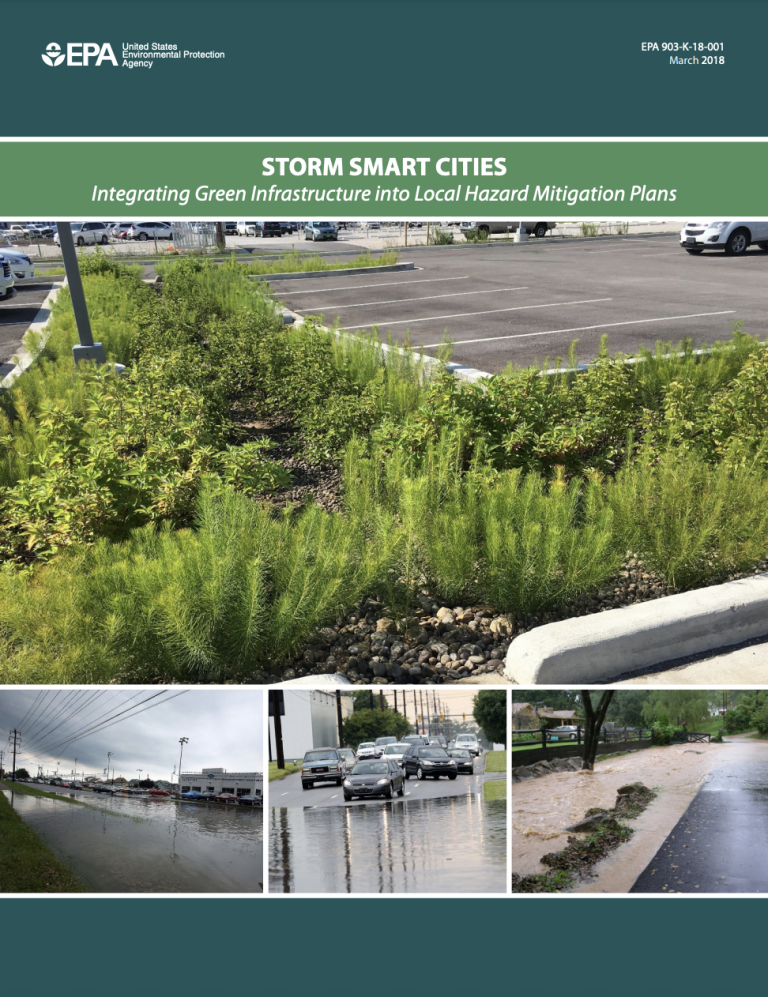
Storm Smart Cities: Integrating Green Infrastructure into Local Hazard Mitigation Plans
This guide, Storm Smart Cities: Integrating Green Infrastructure into Local Hazard Mitigation Plans, is a case study of Huntington, West Virginia and early efforts to consider how green infrastructure could be incorporated into local hazard mitigation plans. It follows a partnership of local, state, and federal organizations and their collaborative effort to address local flooding and protect water quality. While the effort is ongoing, the Storm ...LEARN MORE#Green Infrastructure/Stormwater Management -
 04/16/18
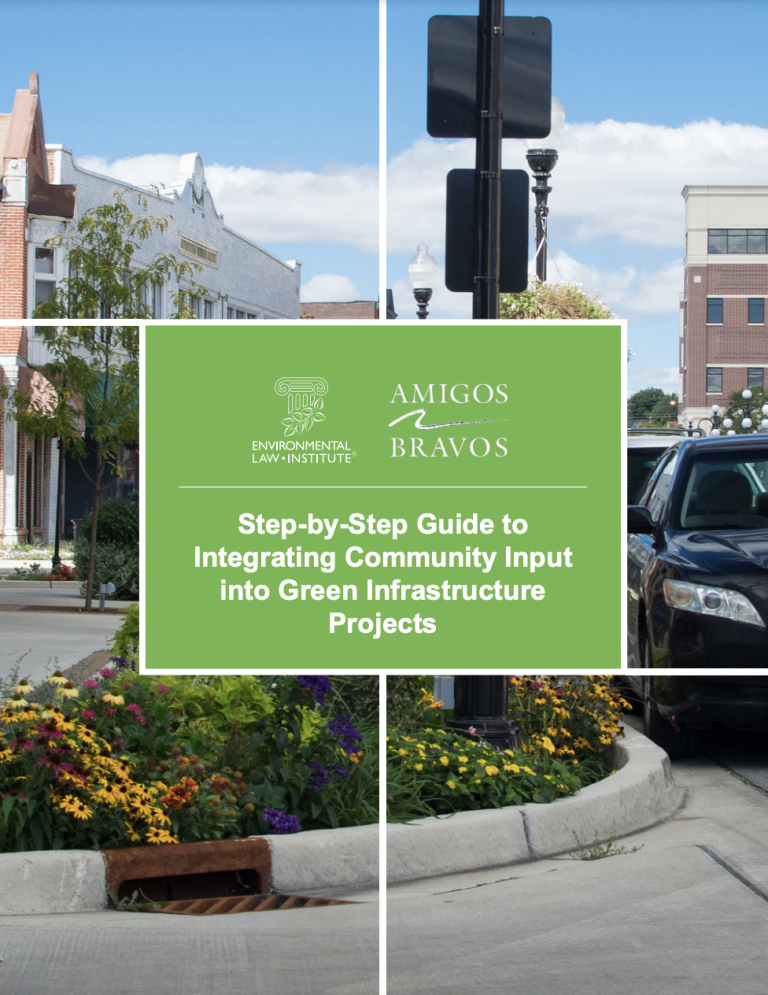
Step-by-Step Guide to Integrating Community Input into Green Infrastructure Projects
ELI and its partner Amigos Bravos drafted this Guide to Integrating Community Input into Green Infrastructure Projects to help local governments integrate community input into their green infrastructure projects. It sets out eight steps that local governments can take and, for each step, provides details and tips to help local governments as they move through the process.LEARN MORE#Green Infrastructure/Stormwater Management